Alright, let's talk about zr1x. When I first heard the buzz surrounding this, I honestly thought, "Is this another overhyped tech announcement?" But I've been keeping a close eye on it, and what I'm seeing suggests zr1x isn't just another incremental update; it's a genuine paradigm shift in computational architecture. We're talking about a system that redefines what we thought was possible in terms of processing power, efficiency, and adaptive intelligence. It's truly exciting, and I believe it's going to reshape countless industries.
What Exactly is zr1x? My Initial Thoughts
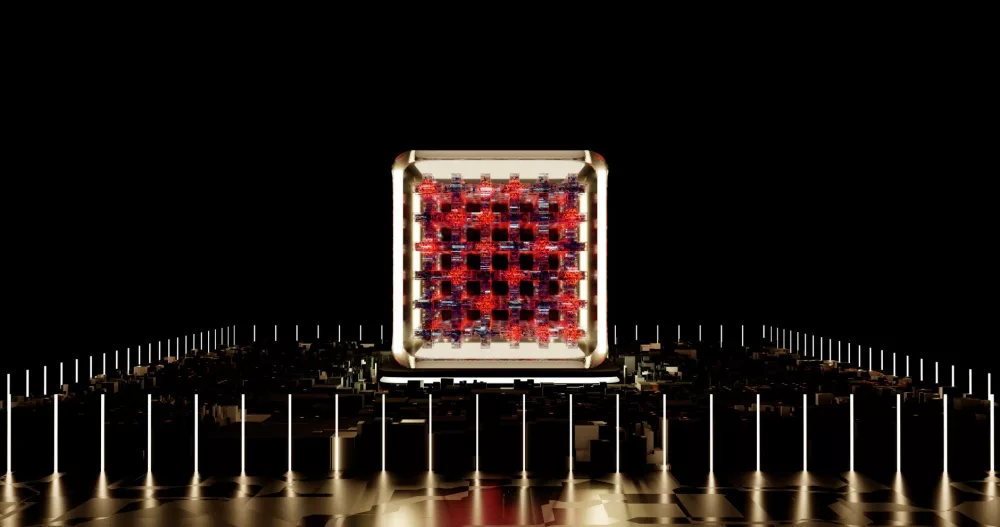
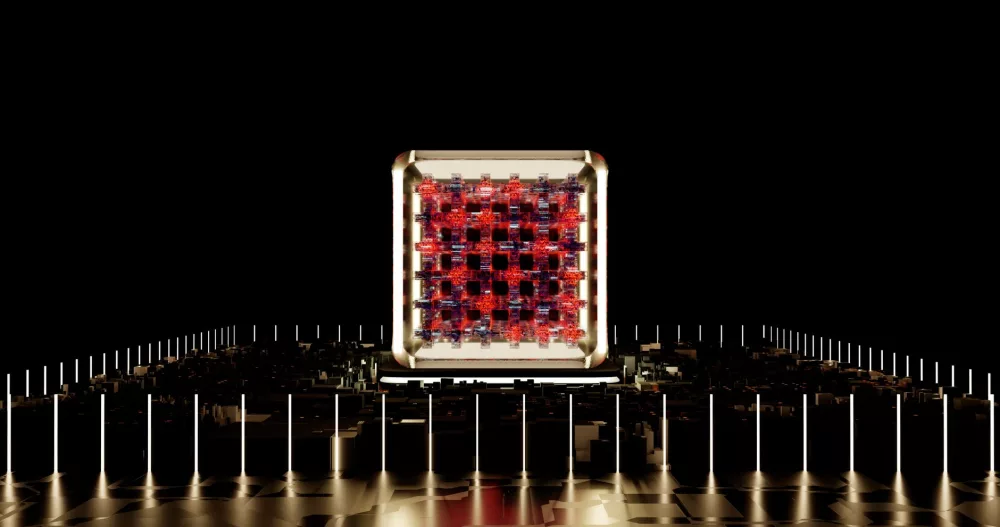
From my perspective, zr1x represents a convergence of several bleeding-edge technologies. It isn't just a faster processor or a new AI model. Instead, it's an integrated system that marries advanced quantum-inspired algorithms with novel, energy-efficient silicon designs, all orchestrated by a self-optimizing operating environment. Think of it as a brain, but one that learns and reconfigures its own neural pathways on the fly, not just to solve problems, but to anticipate them.
You know, for years, we've been pushing against the physical limits of Moore's Law. Chips got smaller, faster, but the heat and energy demands grew exponentially. zr1x seems to sidestep many of these traditional constraints by rethinking computation at a fundamental level. It's not just about brute force; it's about intelligent, adaptive resource allocation.
The Genesis of a Revolution: How zr1x Came to Be
The journey to zr1x wasn't an overnight sprint; it was a marathon, spanning over a decade of intense R&D. I've heard stories about the early days, with small teams wrestling with seemingly intractable problems in quantum decoherence and AI model instability. The breakthrough, as I understand it, came from a novel approach to 'entanglement gates' within a classical computing framework, allowing for probabilistic calculations with astonishing accuracy and speed. This wasn't about building a full quantum computer right away; it was about leveraging quantum principles to supercharge existing, stable architectures.
It wasn't easy, and there were plenty of false starts. But through persistent iteration and a willingness to challenge established norms, the engineers and scientists behind zr1x cracked some truly difficult nuts. What they've delivered is something that feels almost science fiction, but it's very much real.
Key Attributes That Make zr1x a Game Changer
So, what sets zr1x apart? Let's break down some of its core attributes, because these are what really grab my attention:
- Unparalleled Processing Density: We're not just talking about more cores. We're talking about a fundamentally different way data is processed and stored. This translates to incredibly fast computations for complex datasets.
- Energy Efficiency Redefined: This is huge, I think. Traditional supercomputers consume megawatts of power. zr1x, leveraging its quantum-inspired design and intelligent power management, achieves orders of magnitude greater efficiency. This makes it far more sustainable and reduces operational costs dramatically.
- Adaptive Learning & Self-Optimization: This system doesn't just run programs; it learns from them. It constantly refines its own architecture, identifying bottlenecks and optimizing workflows in real time. It's like having a system administrator built right into the silicon.
- Enhanced Security Posture: With its unique computational model, zr1x introduces new layers of encryption and data integrity checks that are incredibly difficult to compromise using current methods. It’s a significant step forward in cybersecurity, in my opinion.
- Scalability with Grace: Unlike some previous high-performance computing solutions, zr1x is designed with modularity in mind. You can scale its capabilities up or down without facing massive architectural overhauls, which is a big deal for businesses.
Impact Across Diverse Sectors: Where I See zr1x Shining
The implications of zr1x are pretty vast, honestly. I can already see it making waves in so many different areas:
- Healthcare & Pharmaceutical Research: Imagine simulating molecular interactions with unprecedented accuracy, accelerating drug discovery, or personalizing treatments based on a patient's unique genomic data in real-time. zr1x could make that a reality, dramatically speeding up clinical trials and diagnostics.
- Financial Modeling & Analytics: For quantitative analysis, high-frequency trading, and complex risk assessments, zr1x's speed and predictive capabilities could offer an enormous advantage. Fraud detection, for instance, could become incredibly sophisticated.
- Advanced Materials Science: Designing new materials with specific properties, simulating their behavior under extreme conditions – these are areas where zr1x's computational muscle will allow for breakthroughs that were previously unreachable.
- Climate Modeling & Environmental Science: Running more accurate and detailed climate models, predicting weather patterns with greater precision, and understanding complex ecological systems could become much more feasible, helping us tackle some of our planet's biggest challenges.
- Artificial Intelligence & Machine Learning: This is a natural fit. zr1x could enable the training of AI models with billions, even trillions, of parameters in a fraction of the time currently required. This means more powerful, nuanced, and perhaps even genuinely sentient AI systems could emerge. It's a bit mind-boggling to think about!
Challenges and the Road Ahead for zr1x
Of course, no technology is without its hurdles. For zr1x, the primary challenges, as I see them, revolve around widespread adoption and integration. It's a fundamentally new architecture, which means existing software and infrastructure will need significant adaptation. There's also the talent gap; we'll need engineers and scientists trained specifically to work with this kind of system.
Then there's the cost. Initially, like any groundbreaking technology, zr1x systems will likely be expensive, limiting their immediate accessibility to larger organizations and research institutions. However, I'm confident that as production scales and the technology matures, we'll see costs come down, making it more widely available.
Looking forward, I anticipate an exciting evolution for zr1x. I think we'll see more specialized versions of the core technology emerge, tailored for specific industry needs. The integration with edge computing devices, for example, could open up entirely new possibilities for truly intelligent, autonomous systems operating in the real world.
It's my sincere belief that zr1x isn't just an interesting development; it's a foundational technology that will redefine our relationship with computation. It’s going to empower us to solve problems that currently seem insurmountable, and I, for one, can't wait to see the innovations it sparks. We're on the cusp of something truly remarkable here, and zr1x is leading the charge.